What Actually Happens in Your First Christian Coaching Session
July 13, 2026
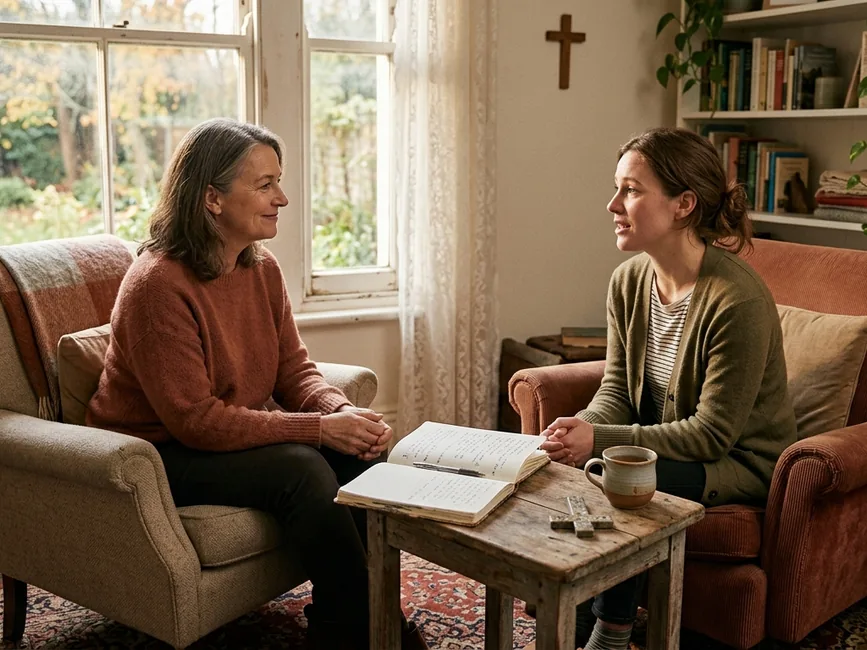
A first Christian coaching session is a conversation, not an interrogation. You set the pace. You share what you’re ready to share and nothing more. Nobody hands you a clipboard or a diagnosis. By the end, you leave with one clear next step, not a list of homework you’ll never do. That’s what to expect from Christian coaching at Share the Struggle: honest, unhurried, and built around you, not a script.
If you’ve been putting off booking because you don’t know what actually happens once you say yes, that hesitation makes sense. Most people who avoid coaching aren’t avoiding help. They’re avoiding the unknown. So here’s exactly how it works, step by step, so there’s nothing left to guess at.
How do I get matched with a coach?
You choose your coach. You don’t get assigned to whoever’s next in line.
When you go to book a session, you’ll see a real team of coaches, each with their own background, story, and areas they focus on. Some have walked through addiction. Some have navigated marriage collapse and rebuilding. Some focus on anxiety, grief, purpose, or faith questions that never got answered. You read a little about each one and pick the person who feels like the right fit for what you’re carrying right now.
This matters more than it sounds like it should. Coaching works because of the relationship, not the credential. If you don’t feel a pull toward a specific coach’s story, look at another one. You can meet the coaches here before you commit to anything.
What happens before the first session?
Before you ever talk to a coach, you share a little about what’s going on so they’re not walking in blind. This isn’t a psychological evaluation. It’s a handful of questions about what you’re hoping to work through and any context that would help your coach show up prepared.
Your coach reviews it beforehand. That’s it. You won’t spend the first fifteen minutes of your session explaining yourself from scratch, and you won’t be asked to fill out anything invasive. This step exists so the actual session can start with real conversation instead of paperwork.
Sessions happen virtually, over video, from wherever you are. There’s no waiting room, no office to find, no small talk with a receptionist. You log in, your coach is already there, and you start talking.
What will the coach actually ask me?
Your coach will ask what’s going on and then they’ll actually listen. Not the kind of listening where someone’s waiting for their turn to talk. The kind where they’re tracking what you say, what you don’t say, and what’s underneath both.
A lot of people come in only able to describe the surface. “I’m anxious.” “My marriage feels off.” “I don’t know why I keep doing this.” That’s a fine place to start. Part of what a coach does is help you connect the dots between what you’re thinking, how you’re feeling, and what you’re actually doing, sometimes called the Thought, Emotion, Action pattern. It’s a simple way of noticing that a thought you haven’t questioned in years might be quietly driving a feeling that’s driving a habit you can’t seem to break.
Your coach isn’t trying to catch you doing something wrong. They’re trying to help you see the whole picture clearly, maybe for the first time, so you can do something about it.
Will I have to share everything right away?
No. You share what you’re ready to share, at the pace you’re ready to share it.
Coaches are trained to move at your speed, not their curiosity. If there’s something you’re not ready to say out loud in session one, you don’t have to. Trust builds. Most people find that once they feel safe, they end up sharing more than they expected to, but that happens because it feels okay, not because they were pushed into it.
There’s no judgment sitting on the other side of the screen. Your coach has likely walked through something similar themselves, or sat with enough people who have, to know that struggle doesn’t make you a project. It makes you human.
What do I leave with?
You leave with clarity on what’s really going on and one real step forward, not a stack of assignments.
Coaching at Share the Struggle is built around a simple idea: face what’s really happening, understand what’s driving it, and take real biblical steps toward change. That third part matters as much as the first two. A session that just makes you feel understood but doesn’t move you anywhere isn’t coaching, it’s just a conversation. Your coach will help you land on something concrete, a shift in perspective, a conversation you need to have, a habit you’re ready to interrupt, so the session produces movement, not just insight.
You won’t leave with ten things to fix. You’ll leave with the next right thing.
How is this different from therapy?
Coaching is forward-focused and action-oriented. It’s built around where you’re headed, not a clinical diagnosis of where you’ve been.
That’s not a knock on therapy. Therapy has its place, especially for clinical mental health conditions that need licensed treatment. Coaching is a different tool for a different need. It’s for the person who knows they’re stuck and wants a faith-grounded guide to help them get unstuck, someone who will ask hard questions, hold them to what they say they want, and walk with them toward real change. If you’re trying to figure out which one fits where you are right now, this breakdown on the difference between coaching and therapy lays it out plainly.
Share the Struggle has run over 11,555 coaching appointments through more than 20 coaches. That volume exists because the model works when people actually show up for it. It’s not clinical. It’s not a program you get processed through. It’s a person, showing up for you, week after week, until you’re not stuck anymore.
If you’re still weighing whether this is even the right move for you, this piece on whether you need a Christian life coach might help you decide. And if you want to understand the thinking behind why the coaching relationship works the way it does, this post on the core assumption underpinning coaching goes deeper into the model itself.
Frequently asked questions
Is it confidential?
Yes. What you share with your coach stays between you and your coach. Confidentiality is part of what makes it safe to be honest in the first place, and your coach won’t share your sessions with anyone else on the team or outside of it.
Do coaches work with couples?
Some coaches on the team work with couples, depending on their background and focus area. When you’re choosing a coach, look at their bio for couples experience, or reach out before booking if you’re not sure which coach fits a couples situation best.
How long is a session?
Enough time to get past the surface and into something real, without turning into a marathon you dread showing up for. When you book, the session length is shown up front, so there are no surprises.
Is coaching the same as therapy?
No. Coaching is forward-focused, built around real steps and practical change through a biblical lens. Therapy is clinical treatment, often for diagnosable mental health conditions, provided by a licensed therapist. Many people use both at different points, for different reasons.
What if I don’t know what I want to talk about?
That’s fine, and more common than you’d think. You don’t need a polished problem statement to book a session. Tell your coach what’s been sitting heavy or what feels off, and they’ll help you find the actual thread from there.
Take the next step
You don't have to carry this alone
Talk with a real coach who has walked this road. One honest conversation can change the direction you are heading.
20+ certified Christian coaches. 11,555+ coaching appointments.
Find my coach → or see how coaching works